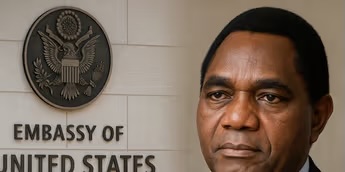
A major health funding agreement between the United States and Zambia has been delayed after both countries failed to finalise a deal valued at over one billion dollars.
The proposed five year agreement was intended to formalise US support for Zambia’s healthcare system through a new memorandum of understanding. However, talks broke down before the April 30 deadline, leaving ongoing assistance without a structured framework.
As a result, critical health programmes addressing HIV, malaria, maternal and child health, and epidemic preparedness are now operating under uncertainty, raising concerns about the continuity of essential services.
According to outgoing US ambassador Michael Gonzales, the absence of a formal agreement has slowed implementation and created risks for programme delivery. He expressed frustration that funding expected to begin had not been activated due to the stalled negotiations.
The agreement also required Zambia to contribute approximately 340 million dollars in counterpart funding over the duration of the programme, a condition seen as challenging given the country’s current fiscal constraints.
Negotiations reportedly collapsed earlier in the year after Zambian authorities raised concerns about certain provisions they considered inconsistent with national priorities.
Further complications arose over clauses linking health funding to broader bilateral discussions, including a separate agreement that may involve cooperation in the mining sector. These provisions sparked concerns that development assistance could be tied to strategic economic interests.
US officials have denied allegations that the deal was connected to negotiations over mineral resources or data privacy, maintaining that the agreement was focused on strengthening healthcare delivery.
Despite this, the linkage between funding and wider negotiations has raised questions about the conditions attached to international aid and the balance between development support and geopolitical interests.
For now, both countries remain without a formal framework to guide one of the largest health funding arrangements in the region, leaving the future of key healthcare interventions uncertain.