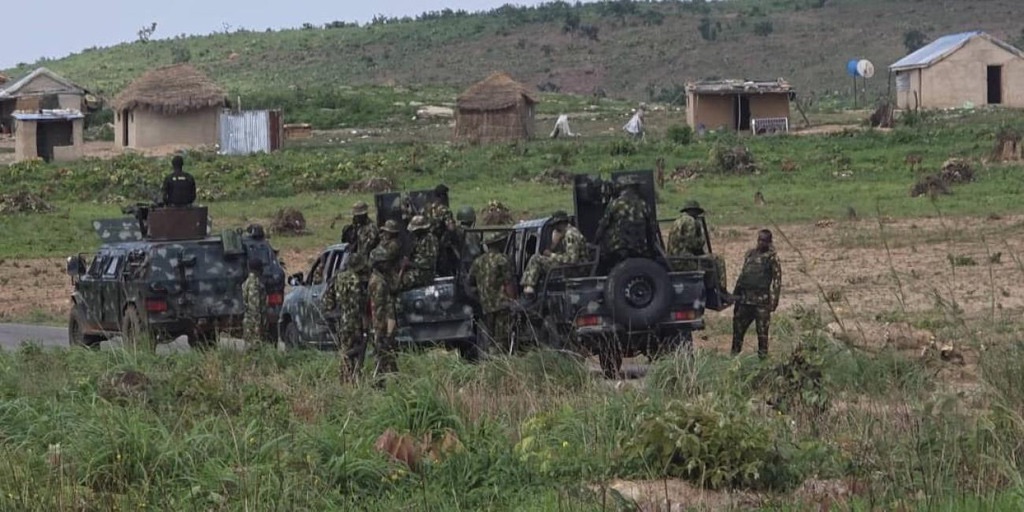
Troops of Operation HADIN KAI have intercepted and seized more than 400 Starlink communication devices allegedly used by Boko Haram and Islamic State West Africa Province (ISWAP) terrorists operating across Nigeria’s North-East region.
The Starlink terminals, linked to satellite internet services operated by Elon Musk-owned SpaceX, were reportedly recovered during sustained military operations conducted in Sambisa Forest, the Timbuktu Triangle and other terrorist enclaves across the region.
The Commander of Sector 2, Operation HADIN KAI, Brigadier General Beyidi Martins, disclosed this while briefing defence correspondents on ongoing military offensives and intelligence-driven operations aimed at dismantling terrorist logistics and communication networks.
According to Martins, the military has intensified efforts to cripple the supply chains and communication structures sustaining insurgent activities.
“The lifeblood of terrorist activities is logistics resupply, and we are deliberately denying them freedom to move supplies, communication equipment, fuel and other operational items across the theatre,” he said.
The commander explained that Boko Haram and ISWAP fighters continued to rely on civilian supply chains and collaborators to transport food items, drugs, fuel, communication gadgets and motorcycle spare parts into remote hideouts.
He alleged that while some civilians voluntarily assist the terrorists, others are forced into cooperation through threats and intimidation.
“There is a high level of collusion between some members of the civil populace and the terrorists. Some do it willingly, while others are forced through threats and coercion,” Martins stated.
According to him, troops have infiltrated several logistics and transport networks allegedly being used by insurgents through coordinated intelligence operations targeting transporters, traders and supply syndicates operating within the North-East.
He revealed that security operatives had arrested hundreds of suspected logistics suppliers, couriers and collaborators linked to terrorist resupply operations.
“It will interest you to know that arrests are made on a daily basis. So far, we have disrupted over 400 logistics-related cases and networks supporting terrorist operations,” he said.
Martins further disclosed that troops intercepted consignments of Premium Motor Spirit (PMS), medical supplies, drugs, food items and spare parts suspected to be heading toward terrorist camps.
According to him, many of the seizures occurred along major supply routes stretching from Kano through Nguru and other corridors leading into Sambisa Forest, the Timbuktu Triangle and adjoining enclaves.
The military commander also accused insurgents of exploiting local livestock markets to dispose of rustled animals and generate funds for their operations.
To address the issue, he said security agencies, market stakeholders and local authorities introduced livestock verification measures requiring proof of ownership before animals could be sold.
“If animals are not properly identified, they will not be sold. Through that arrangement, we are tracking and disrupting their sources of financing,” he added.
Martins maintained that ongoing military offensives and logistics disruption operations had significantly weakened terrorist supply networks and restricted the operational capacity of insurgents across the North-East.
He also claimed that sustained pressure from troops had forced several terrorists and members of their families to surrender.
According to him, the military remains committed to intensifying operations aimed at intercepting terrorist supply routes, dismantling communication systems and denying insurgents freedom of movement across the region.