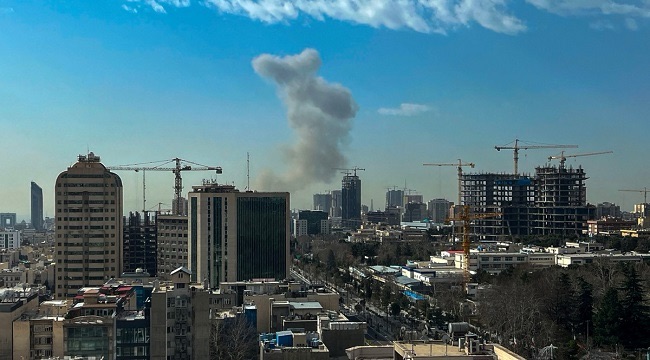
A reported explosion in Tehran has further intensified tensions in the Middle East, as the United States moves to strengthen its military capabilities amid ongoing conflict involving Iran and its regional adversaries.
The United States Department of Defense announced new agreements with major defence contractors, including Lockheed Martin, BAE Systems, and Honeywell Aerospace, to significantly ramp up the production of missiles and critical components.
These agreements aim to replenish stockpiles that have been heavily depleted due to extensive use of interceptor systems like THAAD in countering Iranian retaliatory strikes. Production of key components such as seeker heads is expected to increase fourfold, placing the defence industrial base on what officials describe as a “wartime footing.”
In addition, production of Precision Strike Missiles (PrSM)—recently used in operations against Iran—will be accelerated under a multi-billion-dollar contract, while older systems like ATACMS are gradually being phased out.
At the same time, diplomatic efforts appear to be faltering. Iranian authorities have reportedly rejected a peace proposal put forward by the United States, insisting that any ceasefire would occur only on Iran’s terms. Iranian officials outlined conditions including an end to attacks, guarantees against future aggression, and compensation for damages.
Pakistan has also stepped into a mediation role, conveying proposals between both sides, though no breakthrough has been confirmed.
A key sticking point remains control and security around the Strait of Hormuz, a critical global oil transit route at the centre of the crisis.
With military escalation continuing and diplomatic efforts stalled, the situation underscores growing uncertainty in the region, raising concerns about global energy supply, security, and economic stability