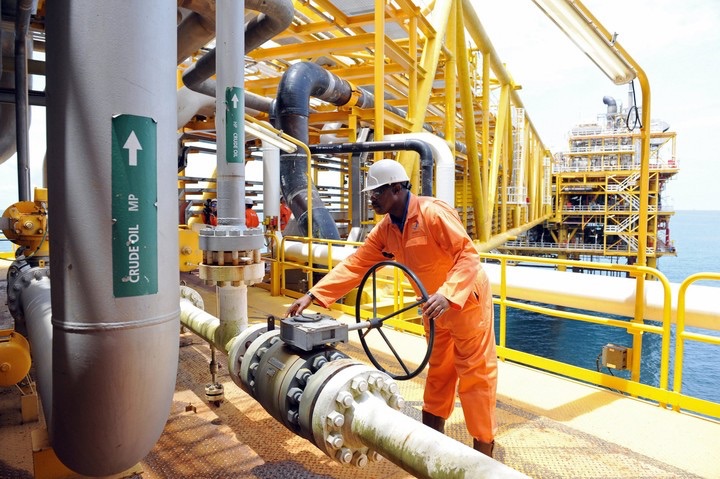
Nigeria’s crude oil production increased to 1.459 million barrels per day (bpd) in January 2026, maintaining its position as Africa’s leading producer, although output remained below its OPEC quota.
The figures, published in OPEC’s latest Monthly Oil Market Report, show a modest rise from the 1.422 million bpd recorded in December 2025 — a month-on-month gain of about 37,000 bpd. The data was compiled through direct communication between OPEC and Nigerian authorities.
Despite the improvement, production still fell short of Nigeria’s assigned quota of 1.5 million bpd, extending the country’s run of underperformance to six consecutive months. Secondary estimates referenced in the report placed output slightly higher at 1.47 million bpd, reflecting common variations in reporting methodology.
Nigeria continues to grapple with structural challenges, including oil theft, pipeline vandalism and years of underinvestment in upstream infrastructure, all of which have constrained its ability to fully utilise production capacity. Operational disruptions and maintenance activities have also weighed on performance.
Within Africa, Libya ranked second in January with output of about 1.37 million bpd, underscoring Nigeria’s continued dominance on the continent despite its shortfall.
Across the wider alliance of OPEC and its partners under the Declaration of Cooperation, total crude production averaged 42.45 million bpd in January 2026, marking a decline of roughly 439,000 bpd from December. The adjustment reflects ongoing efforts by oil-producing nations to stabilise global markets amid shifting demand and economic uncertainty.
Oil production remains critical to Nigeria’s economy, accounting for the majority of foreign exchange earnings and a significant share of government revenue. Higher output is expected to support fiscal stability, strengthen external reserves and aid budget implementation.
For 2026, the Federal Government set an ambitious production benchmark of 2.6 million bpd, but adopted a more conservative 1.8 million bpd assumption for budget planning, reflecting ongoing risks in the sector.
Analysts say sustained investment, improved infrastructure security and regulatory reforms will be essential for Nigeria to close the gap between actual output and its OPEC allocation while ensuring long-term growth in the industry.