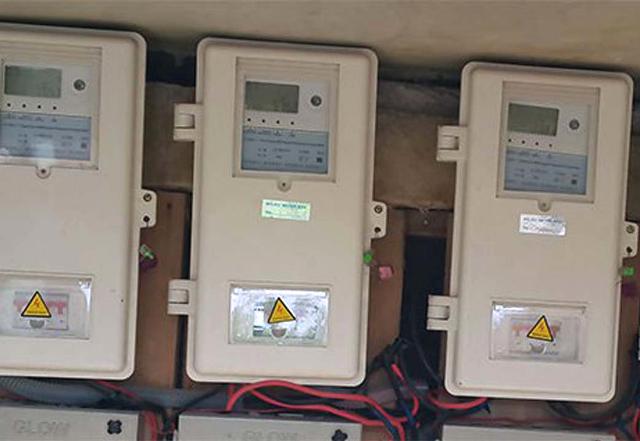
Electricity distribution companies (DisCos) have raised serious concerns about the recent directive by the Minister of Power, Adebayo Adelabu, mandating that prepaid electricity meters be provided to all customers at no cost.
Industry operators, who requested anonymity due to the delicate nature of the issue, described the minister’s announcement as politically motivated and lacking adequate consultation with key stakeholders such as DisCos, meter installers, and meter manufacturers.
Last Thursday, the Federal Government prohibited DisCos and meter installers from charging consumers any fees for prepaid meters. The minister issued a stern warning that any DisCo official or installer found demanding payment would face prosecution. This directive was announced during Adelabu’s inspection of newly imported smart meters at APM Terminals in Apapa, Lagos.
According to the minister, the meters were procured under the World Bank–supported Distribution Sector Recovery Programme and are intended to be deployed to electricity consumers nationwide at no cost. He emphasized that the policy applies to all customer categories and electricity bands, insisting that free installation would improve billing accuracy and revenue collection across the power sector.
However, DisCo representatives argue that the meters are not truly free, noting that the cost would ultimately be transferred to the distribution companies. They disclosed that DisCos are expected to pay for the meters over a 10-year period, a move they say would strain their finances if the expenditure is not properly factored into electricity tariffs.
One DisCo official explained that any capital investment imposed on operators must be recognized as allowable capital expenditure and reflected in tariff calculations. Without this, they warned, DisCos’ financial positions could deteriorate further.
Another operator questioned who would bear the cost of meter installation, pointing out that installers are independent contractors and not DisCo employees. According to them, the responsibility for metering was removed from DisCos during the tenure of a previous power minister, leaving installation and supply to third-party providers.
They further warned that unless the government directly pays installers, it is unlikely that DisCos would assume that responsibility voluntarily. Several operators also criticized the directive as unrealistic, arguing that it ignores the principles of cost recovery that underpin the power business.
Stakeholders also expressed concern that the announcement could undermine the Meter Asset Providers (MAP) scheme, which allows customers to purchase meters directly and receive refunds through energy credits over time. They said many consumers are now refusing to participate in the scheme after hearing that meters are supposedly free for everyone.
According to the operators, the free meters being imported are insufficient to close Nigeria’s metering gap, which runs into millions of households. They stressed that the MAP scheme remains necessary and warned that misleading public statements could harm local meter manufacturers and providers operating under the framework.
DisCo officials urged the government and electricity regulator to provide clarity on who will ultimately fund meter procurement and installation. They cautioned that failure to address cost recovery could result in mounting debts and corner-cutting within the sector.
The operators also expressed worry that customers are becoming increasingly confrontational, believing they are entitled to free meters immediately. They called on the government to manage public expectations by clearly outlining the scope of the free meter programme, identifying eligible areas and customers, and explaining how it aligns with existing schemes.
In their view, transparency and stakeholder engagement are essential to prevent confusion, protect ongoing initiatives like MAP, and ensure the long-term sustainability of Nigeria’s power distribution industry.