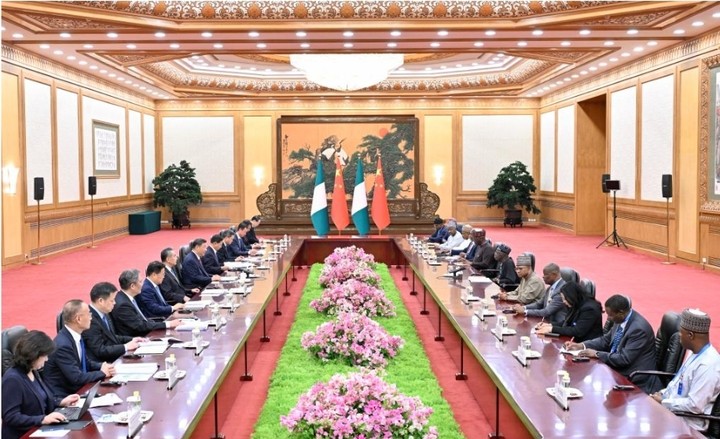
The Ogidigben Gas Revolution Industrial Park (GRIP) in Delta State has been identified as the single largest recipient of construction contracts under China’s Belt and Road Initiative (BRI) in 2025, according to a new report by China energy analyst Christoph Nedopil of Griffith University.
The report estimates the total value of the Ogidigben-related contracts at about $24.6 billion, placing Nigeria at the forefront of global BRI construction activity for the year. A major driver of this surge is a roughly $20 billion contract awarded to China National Chemical Engineering for work on the GRIP project.
As a result, Nigeria’s total BRI construction inflows jumped dramatically from $1.8 billion in 2024 to $24.6 billion in 2025, representing a more than thirteenfold increase. The Ogidigben project alone accounts for the bulk of that figure, highlighting its strategic importance within China’s global infrastructure push.
Globally, BRI construction contracts reached $128.4 billion in 2025, an 81 percent increase year-on-year, while overall BRI engagement stood at about $213.5 billion across roughly 350 projects. Energy remained central to these investments, with energy-related deals totaling nearly $94 billion, largely driven by fossil fuel projects, alongside record levels of green energy activity.
Nigeria’s cumulative energy engagement with China since 2013 is now estimated at $28 billion, ranking it behind only Pakistan and Saudi Arabia. Analysts say this reflects Nigeria’s growing relevance in China’s long-term energy and infrastructure strategy across Africa and the wider Global South.
Africa as a whole experienced a sharp rise in BRI construction activity, with engagements climbing to $61.2 billion in 2025, a 283 percent increase compared to the previous year. This growth contrasts with broader global trends, as foreign direct investment declined and non-BRI investment in Africa fell sharply over the same period. Against that backdrop, Nigeria’s success with the Ogidigben project stands out as a rare bright spot.
Momentum around the project was reinforced in January 2025, when China National Chemical Engineering International Corporation Ltd (CNCEC) announced its commitment to support the Ogidigben Gas Project through restructured financing and partnerships with Nigerian stakeholders. CNCEC President Li Zhenyi described the company’s involvement as part of its contribution to Nigeria’s industrialisation and economic growth agenda.
Despite the renewed optimism, the project has a complex history. It has faced years of delays linked to community tensions between Ijaw and Itsekiri groups, security concerns, and investor withdrawals. Earlier phases were disrupted by alleged militant demands and instability that undermined confidence, leading some original investors to exit the project.
In an effort to revive the initiative, the Federal Government reconstituted key oversight committees in 2022 to address structural and security challenges. Those steps appear to have helped restore investor interest and paved the way for the scale of Chinese participation reflected in the latest report.
Spanning about 2,700 hectares, the Ogidigben Gas Industrial Park is designed as a tax-free industrial zone focused on gas-based manufacturing, including fertilizer, methanol, petrochemicals, and aluminium. The project is expected to generate up to 250,000 direct and indirect jobs and is strategically located near major gas reserves and existing pipeline infrastructure.
If fully realized, the Ogidigben project could become a cornerstone of Nigeria’s gas monetisation strategy and a major catalyst for industrial development and employment in the Niger Delta.